Evolution of AI: From Rule-Based Systems to Generative Intelligence
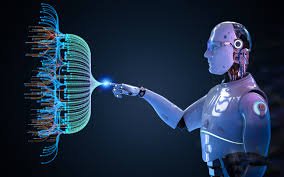
Artificial Intelligence (AI) has undergone an extraordinary evolution — from rigid, rule-driven systems to today’s creative, generative intelligence. Each stage has brought us closer to building machines that don’t just follow instructions but understand, learn, and even create.
This article explores how AI has transformed over the decades, what drove those changes, and what the current era of generative intelligence means for the future.
1. The Era of Rule-Based Systems
In the earliest days of AI, progress was dominated by rule-based or symbolic AI. These systems relied on human experts encoding knowledge into a structured set of “if-then” rules.
A classic example was MYCIN, developed in the 1970s at Stanford University to help diagnose bacterial infections. It applied hundreds of hand-crafted rules derived from medical expertise to recommend treatments.
Key characteristics of this phase:
- Explicit knowledge representation: All reasoning was based on predefined human-written logic.
- Deterministic behavior: The same input always produced the same output.
- High interpretability: Every decision could be traced back to a specific rule.
Limitations: As domains grew, the number of rules exploded, making systems hard to maintain. They also struggled with uncertainty, ambiguity, and learning from experience. These constraints eventually led to declining enthusiasm — the so-called “AI winters.”
2. The Shift to Machine Learning and Deep Learning
By the late 1990s and early 2000s, researchers realised that explicitly programming every rule was not scalable. The focus shifted to machine learning (ML) — letting computers learn patterns from data rather than relying entirely on human logic.
Machine learning introduced the concept of training: feeding data into algorithms so they could adjust internal parameters and “learn” relationships between inputs and outputs.
Deep learning (DL), an advanced branch of ML, later revolutionised this idea by using neural networks with many layers that automatically extracted features from raw data — no manual rule writing required.
Breakthroughs of this era:
- Convolutional Neural Networks (CNNs) for image recognition.
- Recurrent Neural Networks (RNNs) and Transformers for natural language understanding.
- Reinforcement Learning for autonomous decision-making, famously powering systems like AlphaGo.
These methods drove the AI boom of the 2010s — enabling spam filters, recommendation systems, fraud detection, and predictive analytics.
Challenges remained: Models required vast amounts of data and computation, were often opaque (“black boxes”), and lacked general understanding outside their training context.
3. The Rise of Generative Intelligence
We have now entered the age of Generative AI — systems capable not only of analysing data but also creating new content. Instead of simply classifying or predicting, generative models produce original text, images, audio, video, and even code.
The foundation of this revolution was the Transformer architecture, introduced in 2017 in the paper “Attention Is All You Need.” It enabled large-scale language models that could capture context and meaning across entire documents.
Examples of generative applications:
- Text: Writing essays, scripts, marketing copy, or software code.
- Images: Producing art, designs, and realistic photos from text prompts.
- Multi-modal systems: Combining text, vision, and sound to generate interactive and creative outputs.
Advantages:
- Creativity and novelty: Machines can produce ideas or media not explicitly programmed.
- Adaptability: The same model can perform multiple tasks depending on user prompts.
- Enhanced human-AI collaboration: AI becomes a co-creator, augmenting rather than replacing people.
Concerns:
Generative AI also introduces risks — hallucinated information, bias, intellectual-property issues, and ethical concerns. Responsible governance and transparency are crucial as these systems integrate into daily workflows.
4. Why This Evolution Matters
The progression from rules to learning to generation represents a shift from automation to augmentation: AI has evolved from following commands to partnering with humans.
- Rule-based systems automated repetitive logic.
- Machine learning introduced data-driven prediction and personalization.
- Generative intelligence now enables creativity, innovation, and conversational interaction.
This progression is reshaping industries — from finance and healthcare to education and entertainment. Businesses use generative AI to create marketing content, design prototypes, simulate customer interactions, and accelerate software development. Meanwhile, researchers use it to explore new materials, drugs, and designs far beyond human imagination.
5. Phases of AI Evolution — at a Glance
Phase
Approach
Strengths
Weaknesses
Rule-Based Systems
Hand-coded “if-then” logic
Transparent, explainable decisions
Inflexible, poor scalability
Machine Learning / Deep Learning
Pattern recognition from data
Adaptive, high accuracy
Data-hungry, less interpretable
Generative Intelligence
Creation of new content using large pre-trained models
Creative, flexible, multi-modal
Risk of bias, hallucination, IP and ethical issues
6. Looking Ahead: Beyond Generative AI
While generative intelligence is today’s frontier, research is already pointing toward the next phase — agentic and hybrid AI.
Emerging directions include:
- Agentic AI: Systems that plan, reason, and act autonomously to achieve goals.
- Innovative AI: Models that move beyond generation to genuine innovation, creating truly new ideas.
- Explainable and Trustworthy AI: Balancing power with transparency, fairness, and accountability.
- Integration with enterprise workflows: Embedding AI into business processes instead of treating it as a separate tool.
- Hybrid AI: Combining symbolic reasoning from the rule-based era with the flexibility of deep learning for richer, more reliable intelligence.
7. Preparing for the Future
For individuals and organisations alike, the key to thriving in this new era is strategic adoption and continuous learning.
Practical steps include:
- Audit existing systems: Identify where manual rules can be replaced by data-driven or generative approaches.
- Ensure data quality: High-quality, unbiased data is the foundation of reliable AI.
- Experiment and learn: Test generative tools in controlled environments before scaling.
- Build governance frameworks: Establish guidelines for transparency, privacy, and ethical use.
- Upskill teams: Encourage AI literacy so employees can work confidently alongside intelligent systems.
8. Conclusion
The story of AI’s evolution — from rule-based systems to generative intelligence — mirrors humanity’s own journey from logic to learning to creativity.
Rule-based systems taught us how to encode knowledge.
Machine learning taught machines how to learn from data.
Generative intelligence is now teaching them how to create.
As AI becomes more collaborative and context-aware, the line between human and machine creativity continues to blur. The future will likely be defined not by humans versus AI, but by humans with AI — where intelligence, both natural and artificial, evolves together to imagine what’s next.